
Short answer
Eastman describes Tritan as a copolyester that resists odors and stains. This does not mean that odor or discoloration can never occur under any circumstances. Odor is most often associated with beverages being left in the bottle for too long, inadequate rinsing, trapped moisture, detergent residue, or buildup in the recesses of the lid, seal, or straw. Staining can be affected by coffee, tea, spiced or highly colored beverages, scratched surfaces, and improper cleaning. To identify the source, assess the body and lid separately.
When a water bottle smells unpleasant, the body is not always the first component to suspect. The odor often comes from hidden moisture beneath the seal, the straw channel, or residue inside the lid.
What does “odor- and stain-resistant” mean?
When a material is described as odor- and stain-resistant, it means it is designed to perform well in resisting the adhesion of molecules and colorants to its surface during use. Eastman highlights this feature for Tritan water bottles. However, “resistant” does not mean “impossible.” The type of beverage, contact time, temperature, surface scratches, detergent, and cleaning frequency can all affect the outcome.
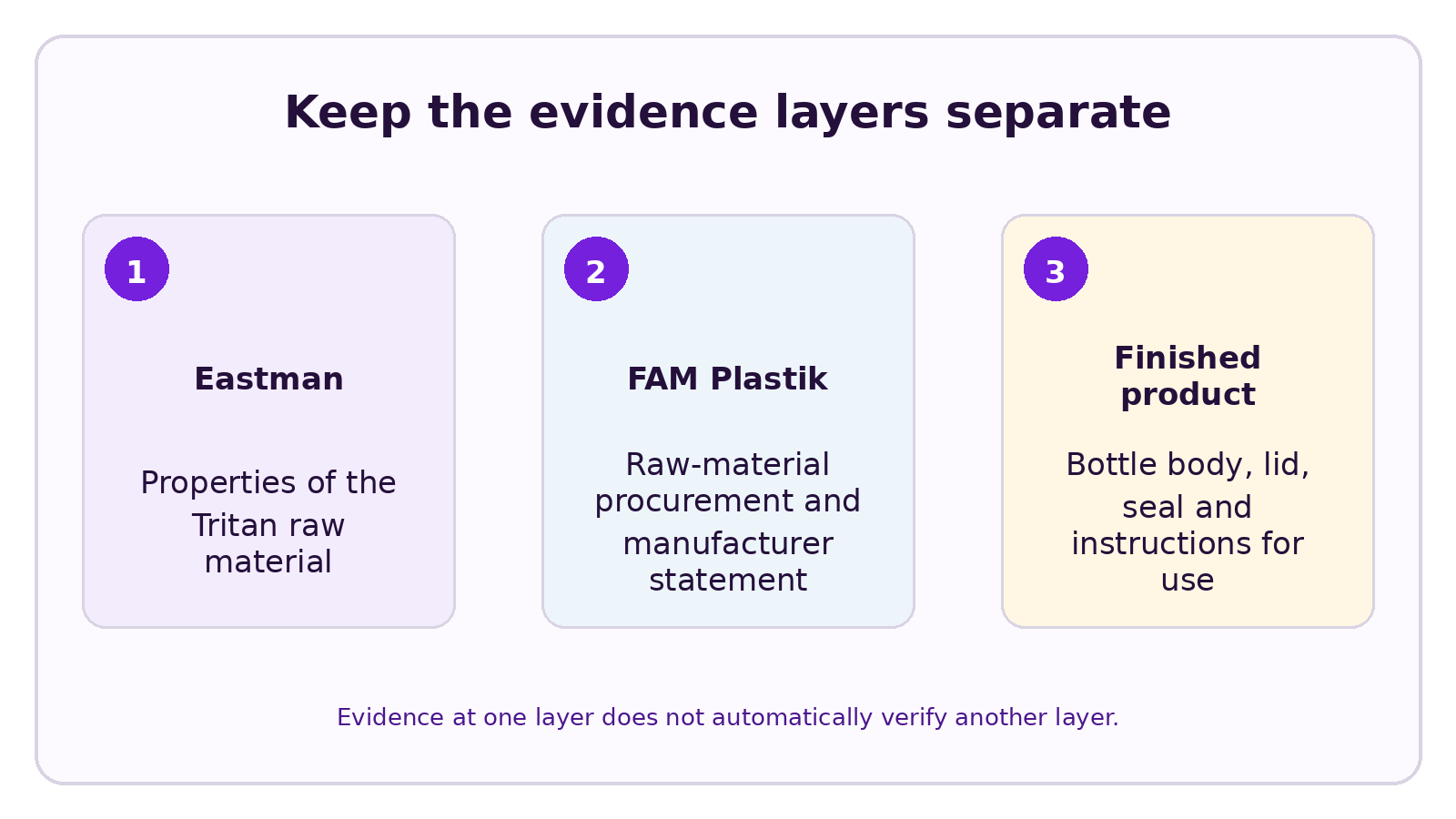
A finished water bottle contains different materials. Even if the Tritan body performs well against odors, a silicone or elastomer seal may retain certain smells more readily. If the narrow interior of the straw or an air channel in the lid is not cleaned adequately, users may mistakenly attribute the odor to the entire bottle.
Images
