
Short answer
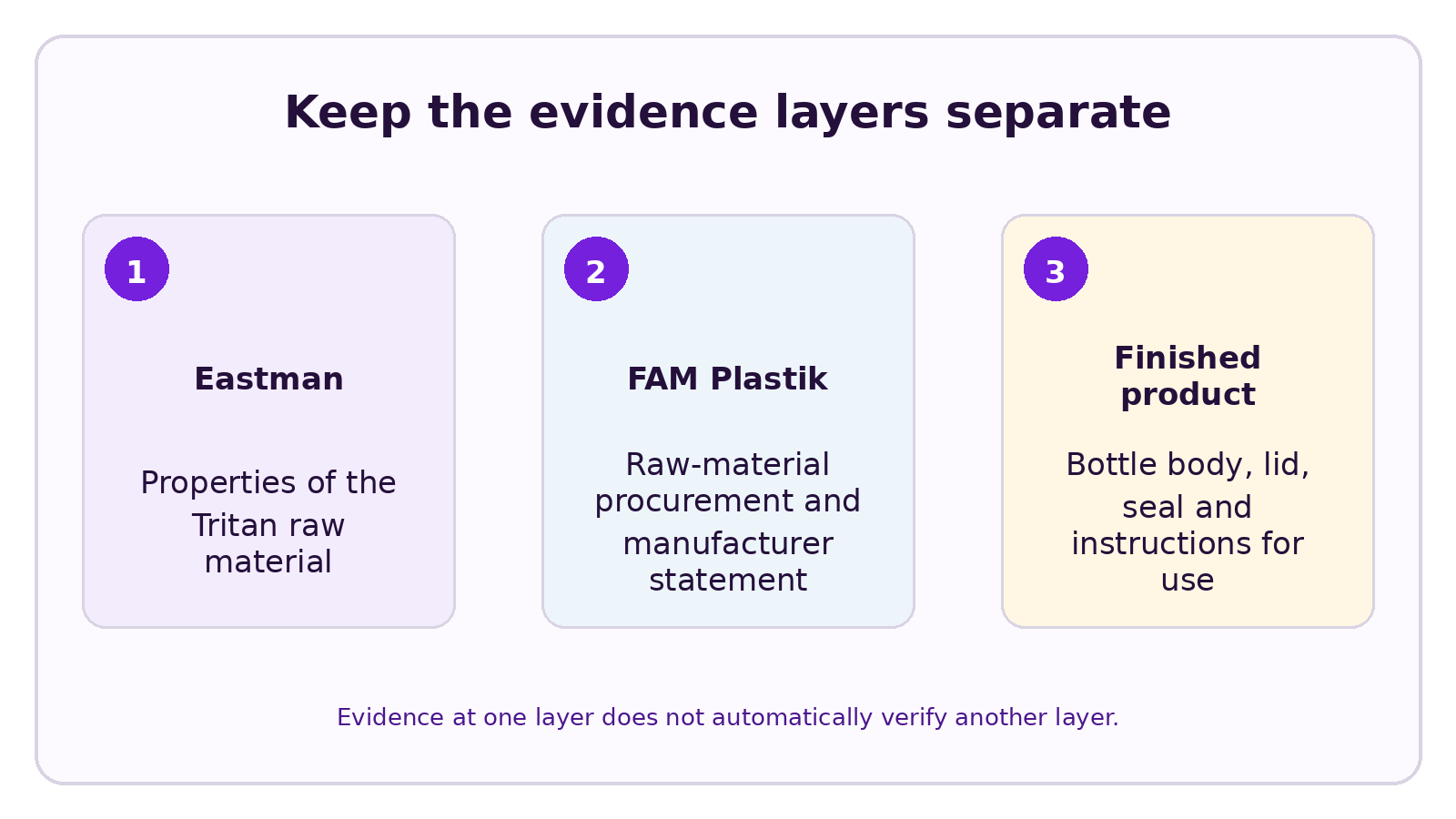
Choosing a healthy water bottle should not be reduced to a single “BPA free” label or material name. The exact body material, manufacturer and supply source, suitability for food contact, product components, traceability, lid/seal design, cleanability, appropriate capacity, empty weight, temperature and beverage instructions, and access to spare parts should all be considered together. The best water bottle is one that suits your use, is transparently documented, and can be used correctly over the long term.
You can begin a purchase decision by asking “glass, stainless steel, or Tritan?”—but a reliable decision is completed by checking the manufacturer’s identity, product design, care requirements, and instructions for use.
1. Look for the material’s exact name
“High-quality plastic,” “healthy material,” or “premium body” is not technical information. Wherever possible, the body material should be stated by its commercial or chemical name, such as Eastman Tritan copolyester, polypropylene, glass, or stainless steel. Remember that the lid and seal may be made from different materials.
2. Distinguish the manufacturer from the seller
A marketplace store may sell the product while a different company manufactures it. The manufacturer’s name, address, contact details, and product responsibility should be visible. FAM Plastik is the manufacturer of CELESTA; this gives consumers an accountable party they can contact.
Images
